Lightning Protection in Hong Kong & Macau
In Hong Kong, lightning protection is not explicitly mandated under the Electricity (Wiring) Regulations. However, the Buildings Department issues clear guidelines requiring new building designs to consider incorporating lightning protection systems. These systems should follow internationally recognised standards such as the British Standard, the Australia/New Zealand Standard, or the IEC 62305 series for risk assessment. The Electrical and Mechanical Services Department (EMSD) also references IEC 62305 in its Code of Practice for the Electricity (Wiring) Regulations.
Macau presents a different challenge. The current legal framework for lightning protection relies on Article 39 of the Adaptation and Integration of Certain Laws and Decrees Published from 1976 to 1993, which mandates lightning protection for specific buildings and facilities—but this provision has not been updated for over 30 years. Industry voices have called for a comprehensive review of Macau's lightning protection regulations.
For Hong Kong projects, IEC 62305 is the leading standard adopted. The current 2010 version remains valid until 2030, providing a transition period for compliance with new requirements. Housing Authority specifications explicitly require lightning protection systems to conform to IEC 62305-1, 62305-2, 62305-3, and 62305-4. Installations should also comply with the latest Code 26I Lightning Protection Installation, which now references IEC 62305 / BS EN 62305.
For Macau, while local regulations lag behind, many contractors refer to GB 50057-2010 (Code for Design of Lightning Protection of Buildings) and GB/T 16895.32-2008. A significant new development is the tripartite group standard General Specification for Lightning Protection of Super-High-Rise Elevators in Thunderstorm-Prone Areas, jointly drafted by Macau, Guangdong, and Hong Kong institutions—the first such standard led by a Macau organisation.
The global building lightning protection device market is projected to grow from approximately USD 3.4 billion in 2025 to nearly USD 5.0 billion by 2033, at a CAGR of 4.77%. Key drivers include:
- Increasing thunderstorm frequency due to climate change, raising awareness of lightning protection measures
- Stringent safety regulations and building codes mandating installation
- Smart city projects and urban infrastructure modernisation sustaining demand for lightning risk mitigation systems
Research groups in Hong Kong have contributed to developing user-friendly software for lightning surge analysis and architectural shielding techniques, which have been adopted in large buildings across Hong Kong, Macau, Manila, Guangzhou, and Shanghai.
Modern buildings are filled with sensitive electronic equipment—network switches, security cameras, access control systems, and building management systems. A lightning strike or even a nearby surge can damage these devices through power and data lines. This is where a Surge Protection Device (SPD), also known as a Surge Suppressor or Surge Protector, becomes essential. Surge protection requirements have been evolving in line with updates to wiring regulations.
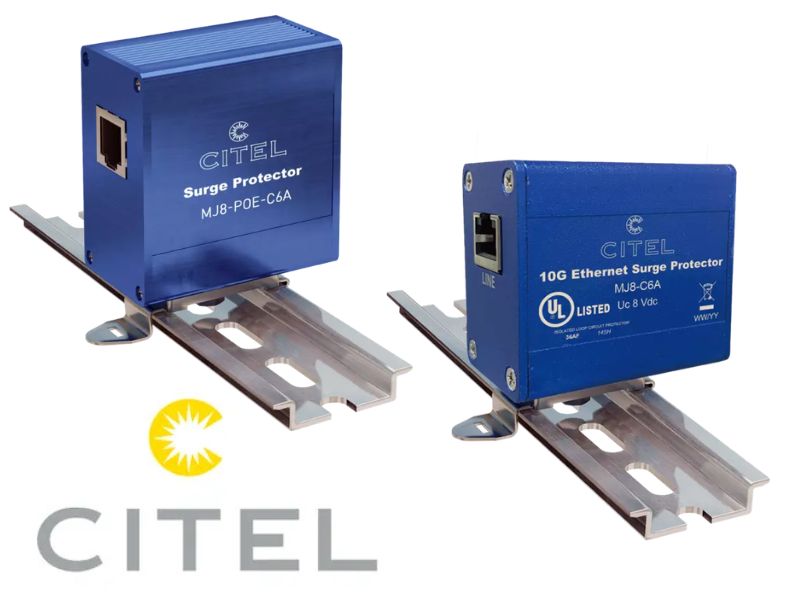
For contractors working on PoE (Power over Ethernet) network installations—common in modern smart buildings—the Surge Protector – MJ8-POE-C6A – Citel is an excellent choice. This Surge Protector offers:
- POE++ compatibility (IEEE 802.3bt)
- 10Gb data rate (5-100m) with Cat6A S/FTP cabling
- Shielded RJ45 connectors
- 16kA total surge discharge capability
- Compliance with IEC/EN 61643-21 (SPD categories D1, C3, C2, C1)
- Metal enclosure, IP20 (NEMA 2)
This Surge Suppressor is designed for indoor applications and provides robust protection for your network infrastructure against transient overvoltages—a critical consideration for any building project in Hong Kong and Macau.